Amaru
The double-headed serpent-dragon of the Andes, moving between the three worlds. When the world order must change, Amaru moves.
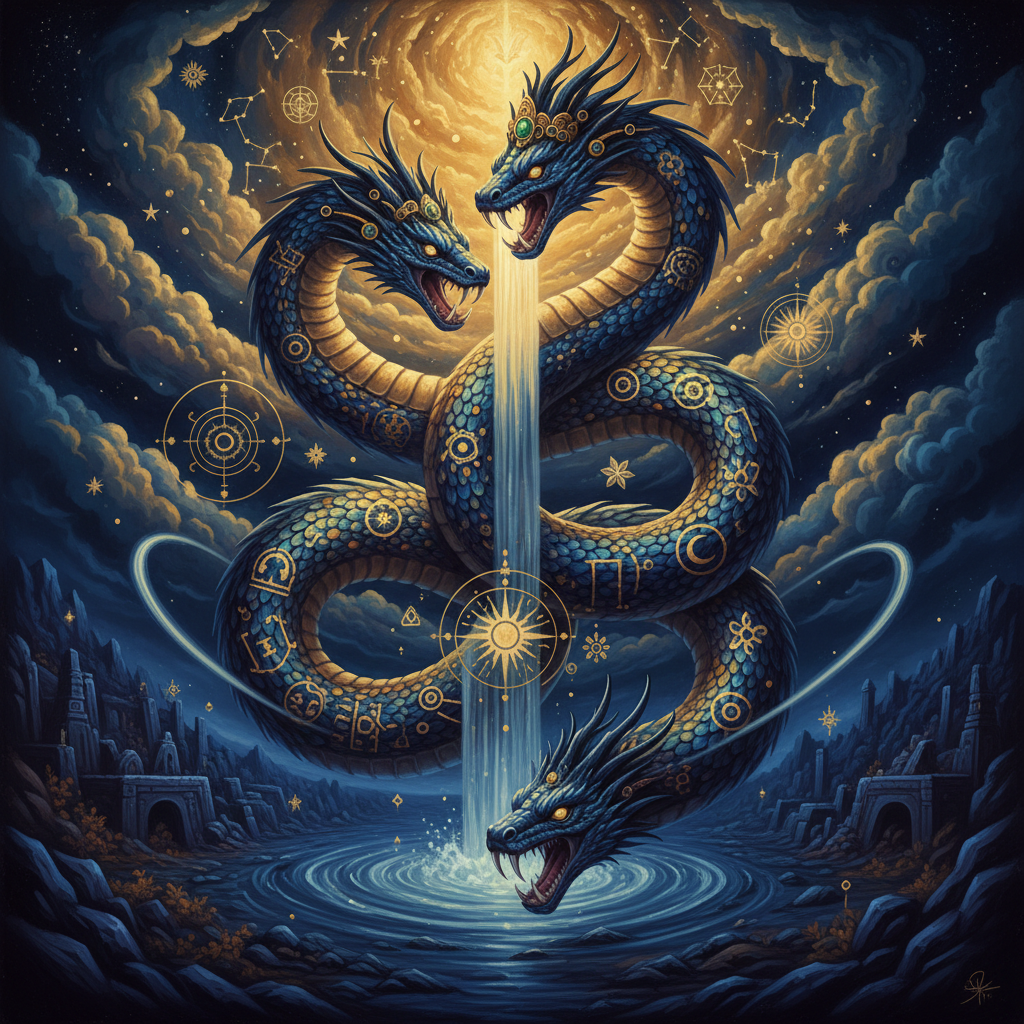
Amaru is the great serpent-dragon of the Andean world, often depicted with two heads, dwelling beneath lakes and springs. It moves between the three worlds of Andean cosmology: Uku Pacha (the below), Kay Pacha (the here), and Hanan Pacha (the above). Amaru is the energy of upheaval and revelation — when the world order must change, Amaru moves. Túpac Amaru, the last Inca sovereign, and later Túpac Amaru II, carried the serpent's name into history as the emblem of the return of just order. In Andean mysticism the serpent also names the first level of the human energy body: the wisdom of the belly, instinct, the ancestral.
The SGE Reading
Gift stage: shadow as upheaval that is also revelation. Amaru is the confirmation that structural change often *feels* like being uncoiled from below.
Canon Resonance
The instinctual belly-wisdom that Elena rediscovers when she says her first true *no*.
A Micro-Practice
Place both palms on the belly. Ask, without words, *what must move now?* Do not answer; let the belly answer with breath and heat.
Sources & Respect
Juan Núñez del Prado, teachings of the Q'ero paqos; *Andean Cosmovision* literature.
The Q'ero, Aymara and other Andean peoples are living traditions. Amaru is honored in ceremonies today; treat the material as living cosmology, not extractable myth.